
Fluid Extractors, Oil Extractor Pumps, and Fluid Transfer Pumps: A Practical Guide to Cleaner, Faster Maintenance
Whether you are changing engine oil, servicing a marine gearbox, repairing a hydraulic system, or moving coolant between equipment, the right pump can turn a messy, slow job into a controlled and professional procedure. Fluid extractors, oil extractor pumps, and fluid transfer pumps look similar at first glance, yet they are designed for different tasks. Understanding those differences helps you choose a tool that saves time, reduces spills, and protects the equipment you are working on.
Why the Right Pump Changes the Job
A pump is not simply a container with a hose. It is a pressure-management tool. It must create enough vacuum or flow to move the target liquid while remaining stable, clean, and easy to control. For routine maintenance, that means less bending, fewer drain plugs to remove, and far less risk of hot oil or chemical splashing onto the floor, skin, or nearby components.
The best choice depends on three practical questions: What fluid are you moving? How much volume must move? Where does it need to go? A thin liquid such as coolant behaves very differently from warm engine oil, gear lube, or contaminated waste fluid. Volume matters too. A small extractor may be perfect for a motorcycle or generator, while a larger workshop unit is better for trucks, boats, and fleet service.
Fluid Extractor: Controlled Removal Without the Mess
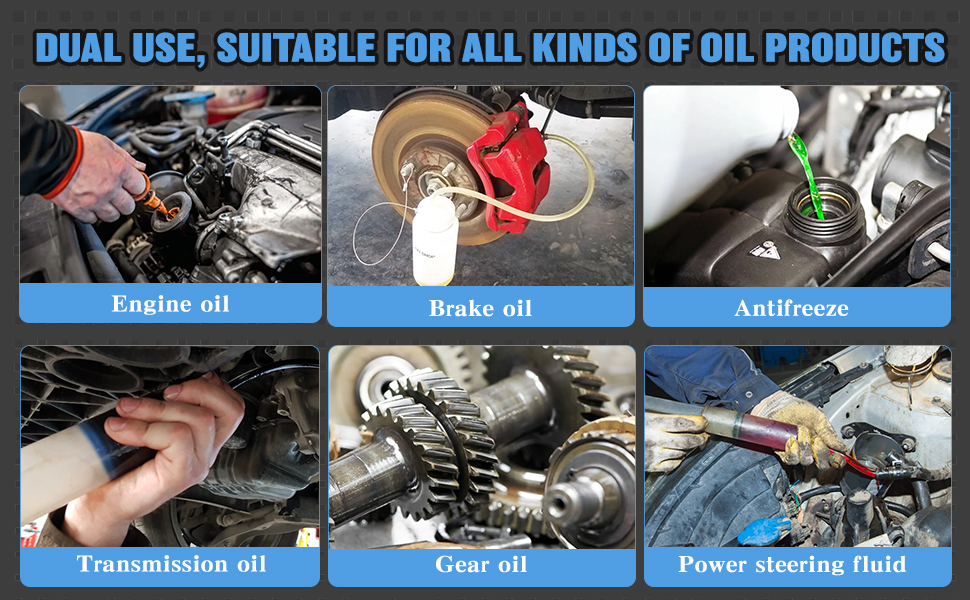
A fluid extractor is designed primarily for removal. It uses vacuum pressure to pull fluid out through a dipstick tube, drain port, or probe. This makes it especially useful when a drain plug is difficult to reach or when you want to avoid lifting and tilting equipment. Many technicians use extractors for engine oil, transmission fluid, brake fluid, power steering fluid, and even water from small tanks.
- Clean operation: fluid goes directly into the container instead of onto the floor.
- Access-friendly: ideal for engines with top-mounted dipstick tubes.
- Portable: manual and pneumatic models work well in home garages and mobile service kits.
- Repeatable: clear markings help you measure the amount removed.
Practical tip: warm oil flows faster than cold oil, but never use an extractor on fluid that is hotter than the manufacturer’s recommendation. Warm is helpful; scalding is hazardous.
Oil Extractor Pump: Built for Viscous, Sensitive Work
An oil extractor pump is a specialized fluid extractor aimed at engine oil, gear oil, and similar lubricants. It often includes a durable pump body, chemical-resistant hoses, and a container with volume markings. The key advantage is controlled suction. Instead of opening a drain plug and hoping the stream lands in the pan, you guide the hose into the sump and watch the oil leave the engine.
This approach is popular for marine engines, lawn equipment, generators, and vehicles where underbody access is limited. It is also useful in winter or rainy conditions when working beneath a vehicle is uncomfortable. However, an oil extractor is not a substitute for every drain-plug service. Some vehicles hold sludge or debris near the bottom of the pan, and a traditional drain may still be the better choice when a full flush or inspection is required.
Fluid Transfer Pump: Movement, Not Just Removal
A fluid transfer pump is more versatile. It can move fluid from one container to another, fill a reservoir, empty a tank, or circulate liquid during maintenance. Common uses include transferring diesel, coolant, hydraulic fluid, water, and waste oil. Some models are manual rotary pumps, while others use compressed air or electric motors for faster volume movement.
| Tool | Best Use | Key Strength |
|---|---|---|
| Fluid extractor | Removing fluid through a dipstick tube or port | Clean, controlled extraction |
| Oil extractor pump | Engine oil, gear oil, and lubricants | Handles viscous fluids with less mess |
| Fluid transfer pump | Filling, emptying, and moving liquids | Versatility and faster volume movement |
Choosing Between Them
- Start with the task. If you only need to remove oil, an extractor or oil extractor pump is usually enough. If you need to fill and empty multiple containers, choose a transfer pump.
- Check fluid compatibility. Confirm that hoses, seals, and the pump body resist the fluids you plan to use.
- Match capacity to workload. Small jobs favor compact manual units; fleet or marine work may justify a larger pneumatic or electric model.
- Look for cleanability. Removable hoses, wide openings, and smooth interiors make maintenance easier and reduce cross-contamination.
Safety and Maintenance Habits That Matter
Always work in a ventilated area and keep waste fluid in a clearly marked container. Inspect hoses for cracks before use, and never force a hose into a port where it does not fit. After each job, flush the pump according to the manufacturer’s instructions and store it clean and dry. Small maintenance habits protect both the pump and the equipment it serves.
Used properly, a fluid extractor, oil extractor pump, and fluid transfer pump each earn a place in a well-organized workshop. They reduce spills, improve access, and make routine fluid service faster and more predictable. The smartest purchase is not always the largest pump; it is the one that matches your fluid, your volume, and your workflow.