Smart Snack Containers, Lidded Boxes, and Food Storage Containers: A Practical Guide to Fresher Bites and Less Waste
Snacks are small, frequent, and easy to lose track of. That is why the container you choose matters more than many people expect. A good snack container keeps crackers crisp, fruit from bruising, and nuts away from stale air. A snack container with a lid goes one step further: it protects flavor, prevents spills, and makes portions easy to grab. And when you zoom out, food storage containers turn a scattered kitchen into a system that saves money, time, and shelf space.
This guide looks at all three categories — snack containers, lidded snack containers, and larger food storage containers — and explains how to choose, use, and care for them without overcomplicating your kitchen.
Why the Right Container Changes Everything
A snack is only as good as its texture. Soft cookies turn hard, chips turn chewy, and cut fruit turns dull when air and moisture get too comfortable. The right container creates a small, controlled environment. It blocks air, limits crumbs, and keeps flavors from mixing.
There is also the practical side: containers make snacks visible, portable, and portioned. When healthy snacks are packed in clear, easy-to-open boxes, they are more likely to be eaten before they go bad. That simple shift can reduce food waste and cut down on last-minute vending machine decisions.
Quick rule: match the container to the snack’s enemy. For chips and crackers, the enemy is moisture. For cut fruit, it is air and bruising. For nuts and granola, it is stale air and heat.
Snack Containers: Small Size, Big Impact
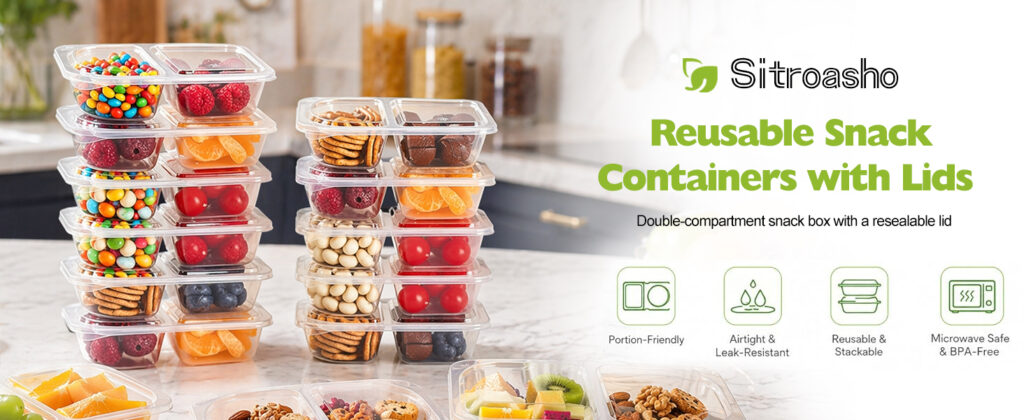
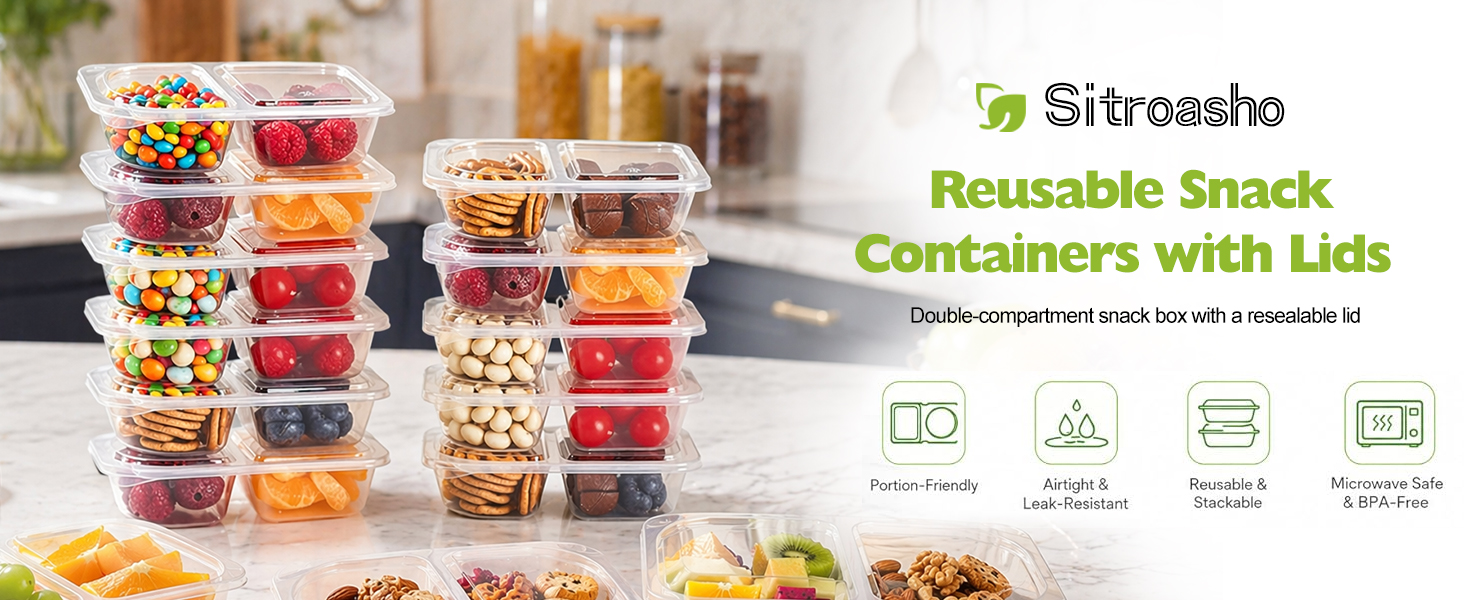
Snack containers are usually smaller than standard food storage boxes. They are designed for single servings, lunchboxes, desk drawers, and car trips. Their size is their advantage: they encourage portion control and fit into tight spaces.
Look for containers that stack neatly and have rounded corners, which make them easier to clean and empty. Clear or semi-clear bodies help you see what is inside without opening every lid. If you pack lunch for work or school, small snack containers can separate grapes from cheese cubes and pretzels from dried apricots.
Best uses for small snack containers
- Nuts, seeds, and trail mix
- Cut vegetables with a small dip cup
- Crackers, pretzels, and cereal pieces
- Dried fruit and chocolate chips
- Pet treats or small craft supplies
Snack Containers with Lids: The Seal That Saves the Day
A snack container with a lid sounds obvious, but not all lids are equal. A loose lid lets air in; a weak lid pops open in a bag; a poorly designed lid traps odors and makes cleaning frustrating. The best lids are simple to open, secure to close, and easy to wash.
Four lid styles dominate the market. Each has a personality:
- Snap-on lids — fast, beginner-friendly, and great for dry snacks.
- Screw-on lids — secure and leak-resistant, ideal for dips and juicy fruit.
- Flip-top lids — convenient for one-handed snacking, but check the hinge quality.
- Ventilated lids — useful for fresh produce that needs a little airflow.
For lunch bags and backpacks, choose a lid with a silicone gasket if you plan to pack anything moist. For pantry shelves, stackable snap lids often win because they are compact and easy to label.
Lid care matters
Wash lids separately from heavy dishes, and let them dry fully before storing. Trapped moisture under a gasket can create odors or mildew. If a lid starts to smell, soak it in warm water with baking soda, then air-dry it in a sunny spot.
Food Storage Containers: Beyond Snacks
Food storage containers handle the bigger jobs: leftovers, meal prep, bulk grains, and batch-cooked soups. They share DNA with snack containers, but they need stronger seals, larger capacities, and better stackability.
Use a mix of sizes rather than buying one giant set of identical boxes. A few small containers for snacks, medium ones for leftovers, and large ones for grains or broth create a flexible system. Square and rectangular shapes use shelf space more efficiently than round ones, while round containers are easier to stir and reheat.
| Container type | Best for | What to check |
|---|---|---|
| Small snack container | Nuts, fruit, crackers | Stackability and easy-clean corners |
| Snack container with lid | Lunchboxes and travel | Secure seal and leak resistance |
| Food storage container | Leftovers and meal prep | Capacity, freezer safety, and lid fit |
How to Choose Without Overbuying
Start with the snacks you actually eat. If you love crispy crackers, prioritize airtight containers. If you pack juicy fruit, prioritize leak-resistant lids. If your pantry is chaos, prioritize clear containers and labels.
Check three details before buying:
- Material: glass is heavy but excellent for leftovers; plastic is light and practical for lunchboxes; stainless steel is durable and odor-resistant.
- Lid fit: close it once in the store or read reviews about seal quality.
- Cleaning: avoid narrow necks and deep grooves that trap food.
Final Thoughts
Snack containers, snack containers with lids, and food storage containers are not just storage. They are small tools for better eating, less waste, and a calmer kitchen. Choose containers that match your real routines, keep lids paired with bases, and label anything that goes into the freezer. With a little intention, every snack stays fresher — and every shelf works a little harder.